Wednesday, November 18, 2026

BLOG POST 12 REFLECTION


1. Understanding student behavior instead of labeling students and supporting students in a way that is beneficial to them.
Connected to: Troublemakers and the assets vs. deficit model.
Why it is meaningful:
  • A student who struggles with behavior is not automatically a bad student.
  • Teachers should look at the root cause of the behavior issue.
  • Sometimes classroom expectations and teaching approaches need to change to improve a student's behavior.
  • Students should not be defined by their weaknesses.
  • Every student has strengths, interests, and abilities.
  • Teachers should build students' confidence instead of constantly pointing out what they struggle with.
    One of the biggest takeaways from this semester is the importance of looking beyond a student's behavior. The Troublemakers reading made me realize that children are often labeled as difficult or disruptive without teachers considering what might be causing those behaviors. In my own classroom, I want to focus on positive reinforcement, keeping students engaged, and adjusting my teaching when something is not working rather than immediately blaming the child. This reminds me of the importance of using an asset-based approach instead of a deficit-based approach. I think it is important to focus on what students can do and build on their strengths rather than constantly reminding them of what they struggle with. As a future teacher, I want my students to feel confident in themselves and know they are capable of learning new things, even when something is challenging.

2. The Importance of Classroom Environments
Connected to: My experience working at two different preschools and Kohn's what to look for in a classroom
Why it is meaningful:
  • Classroom environments affect how students feel and learn.
  • Organization, visuals, student artwork, and classroom materials make a difference.
  • A welcoming environment helps students feel comfortable and included.
    Something that really stood out to me this semester was how much a classroom environment can affect students. I was able to experience two very different preschool environments, one with very little organization or decoration and another that was colorful, welcoming, and full of student work. This helped me realize how important it is to create a classroom where students feel comfortable, represented, and excited to learn. Seeing these different types of environments helps me know what kind of teacher I want to be. I want to be the type of teacher that it takes you a minute to find because I am working with students. I want all of the children to be able to see and interact with each other. I also want my classroom to be a safe and welcoming space for all my students and their cultures. I will always be looking to gain new knowledge to help me become a better teacher. Positive classroom environments help children stay engaged, interested, and still able to have fun.

3. The Cultural Iceberg 
 Connected to Delpit, the “differences” are more than just the visible things. 
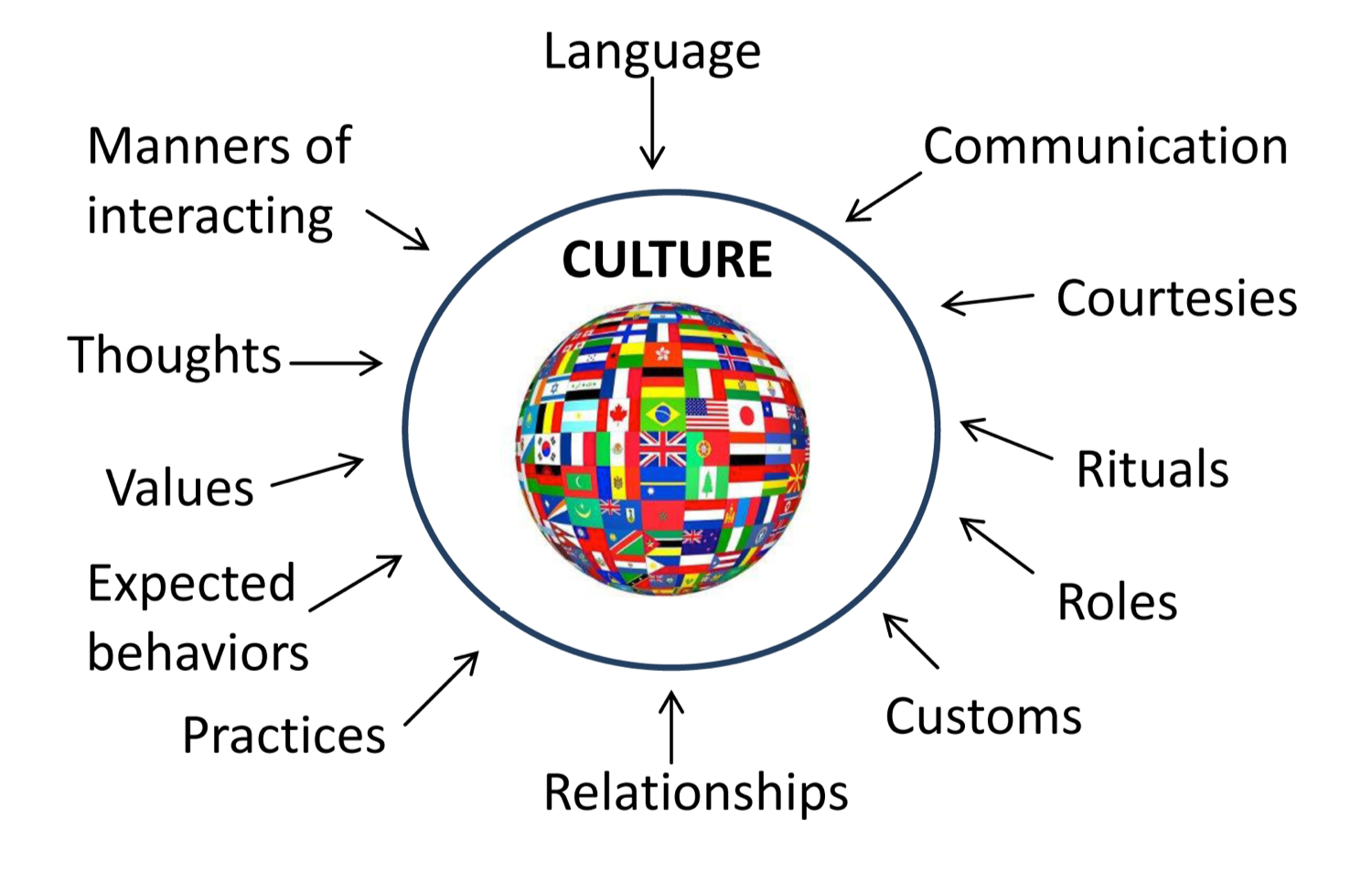
 Main idea: Culture goes much deeper than what we can see on the outside. We might notice someone's language, clothing, or traditions, but there are many things underneath the surface, such as values, beliefs, family expectations, communication styles, and experiences. 
Why it is meaningful: 
  • It reminds teachers not to make assumptions about students based on what they see.
  • Two students might appear similar but have completely different backgrounds and experiences.
  • Teachers need to take the time to understand what is underneath the surface rather than judging students based on their behavior or appearance.
    The Cultural Iceberg is something that will stick with me because it shows how much more there is to a person than what we see on the outside. We might notice someone's language, appearance, or traditions, but there are so many things underneath the surface that shape who they are, including their values, beliefs, family experiences, and upbringing. As a future teacher, I want to remember that I cannot understand a student just by looking at them. I need to take the time to learn about their backgrounds and experiences so I can better support them in my classroom. I want to be able to incorporate all of my students' cultures and backgrounds into my classroom.Commentary: Building Trust Between Students and Teachers Helps Kids Overcome Trauma — and Makes Schools Safer – The 74

AI Statement: I used AI to help me organize my thoughts on these three topics. 

https://learningpolicyinstitute.org/blog/four-ways-schools-can-support-whole-child


Friday, November 13, 2026

Guidance for Rhode Island Schools on Transgender and Gender Nonconforming Students and Nondiscrimination

Interpretation of Federal Laws — Gender Inclusive Schools

Quote 1- "All students, without exception, have the right to attend a school in which they feel safe and able to express their identity without fear" (p. 3).  This was brought up in both of the readings. No matter what their gender identity is, they should feel accepted in school and that they have equal opportunities as all the other students. It makes clear that every student deserves acceptance, not just students who fit traditional gender expectations. Students should not be scared to express their identity. They should feel supported no matter what their identity is. 

Quote 2- "All people, including students, have a right to privacy, and this includes the right to keep one's transgender status private at school" (p. 7). Teachers need to understand that a student's personal information is confidential. They should not assume they can share information about a student with others. It takes a lot for a student to share this information, and they should be able to trust the adult they are telling. Teachers need to respect their students' privacy and boundaries. 

Quote 3- "The District shall ensure that training is provided for all staff members on their responsibilities under applicable laws and this policy" (p. 6). Supporting students is not just the responsibility of counselors or administrators. All school employees need to understand how to create inclusive environments. It is important to have training so teachers know what to do in this situation and how to handle it as best they can. 

AI- I used AI to help me summarize.

Reflection- These also made me think about my future classroom, especially considering they are related to RIDE. These brought up how teachers will sometimes separate boys and girls, and this isn't inclusive and could make children feel bad.  I want to create a classroom where children feel comfortable being themselves and being able to express themselves. Students should not feel like they have to change their behavior, appearance, or interests to fit into traditional expectations. When I learn personal information about a student, I will follow school confidentiality policies and help protect my students' needs and concerns. Another takeaway is that as a teacher, I will not assume that every student has the same experience, family situation, or needs. I want all my students to feel accepted and for my classroom to be a welcoming environment. A student who feels accepted and supported is better positioned to participate, build relationships, and focus on learning. 

https://www.ed.gov/media/document/factsheet-supporting-transgender-youth-school-june-2021-112270.pdf

Sunday, November 8, 2026

Troublemakers- Shalaby

Argument- In these two readings, the main argument is that the children who are labeled as disruptive, difficult, or disobedient are not necessarily the problem, and it can reveal issues within the school system. It challenges the belief that children must obey adults and follow classroom expectations exactly. She wants teachers to look beyond the child's behavior, find the root cause of it, and question the school rules and expectations. It talked about Anthony, who was a student who would talk while other students were speaking, was aggressive on the playground, destroyed classroom materials, ignored the teacher's directions, walked out of the classroom, and refused to complete activities. Due to this, he was labeled as a "problem child." The teacher knew that she was the leader and he was the follower, and he should obey what she says; since he didn't, and he didn't fit into the traditional expectations of school, all the blame was put on him instead of looking at the school system. Young children have more freedom to explore, express, ask, and challenge things around them. However, once they enter school, their natural behaviors become restricted. Students are expected to sit still, remain silent, and agree with the teacher without questioning them. The word "obedience" came up, and a child drew children sitting in rows at a desk. This shows that school was more about obeying and following rules than actually learning. The argument also relates back to freedom and questions how much freedom students are actually given in a school setting. They deserve the right to be able to make choices, ask questions, express themselves, and build their independence. Children have very little control over their learning, and they're told everything to do and how it should be done instead of them figuring it out on their own. When they exercise their independence, they are often punished for it and left excluded from their class.

Reflection- Currently, I'm a preschool teacher, and I'm always thinking about how I want to be as a future educator. Since I'm preschool certified, I'm usually alone with my kids for the majority of the day.
The other day, I covered for their main teacher. When I was doing circle time with them, I was going to read them a book. There's a chair on the rug that their teacher usually sits in during circle time. Before I read to them, I sat on the carpet with them. They looked at me like I was crazy because I sat with them. They even told me that their teacher sits in the chair and that I should sit there. I told them that I wanted to sit with them, and it was mind-blowing to them. I think it is pretty easy to spot the children who struggle more on the behavioral side. Instead of looking at them as bad, I try to correct their behavior positively and use positive reinforcement, and really take notice of the good they do. When they aren't engaged during activities, instead of blaming them, I try to shift it around in a way that will help them become more interested. I always try to be involved with them and insert myself in situations where I can act like them, not just their teacher. I never want to blame my students; instead, I want to look at my class and what I'm teaching and how I can improve it.

AI statement- I used AI to help give me a summary. 


Wednesday, October 28, 2026

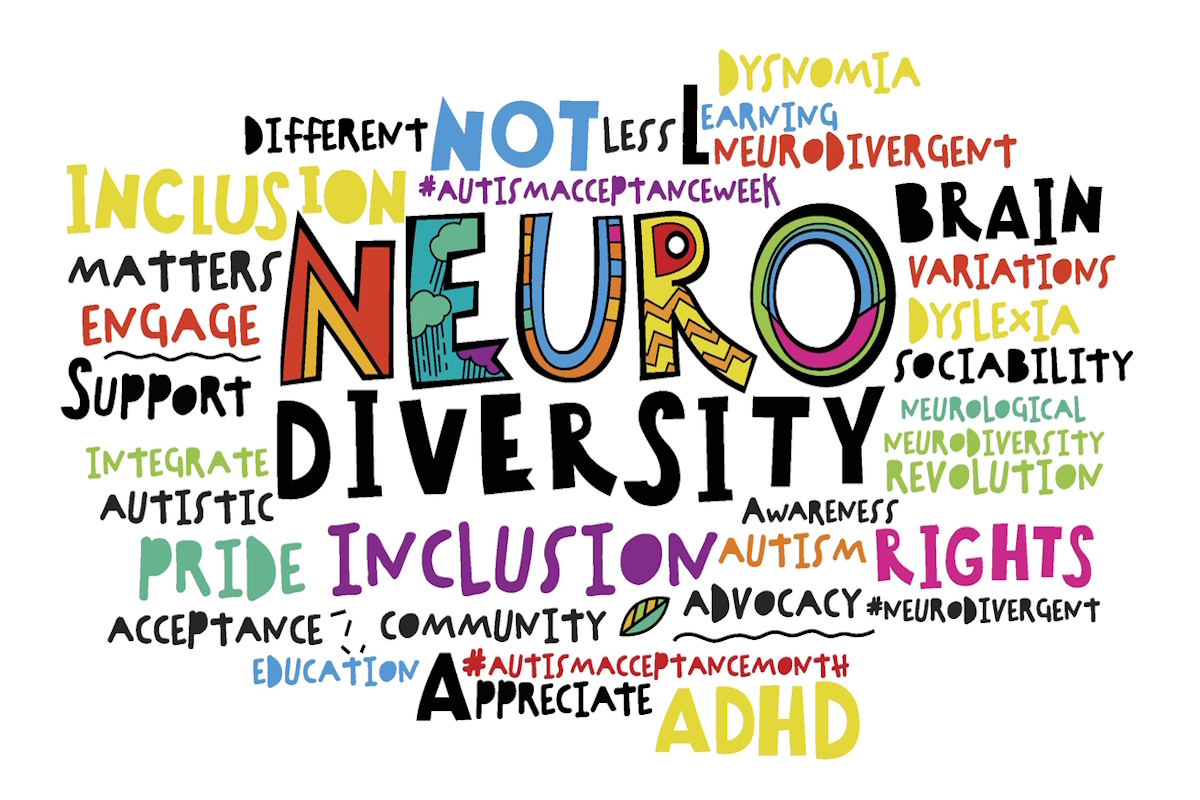
What is Neurodiversity-Caroline Miller

Business Reporter - Human Resources - Making neurodiversity ...

Quote 1- "But not meeting the criteria for a disorder doesn’t mean the child’s struggles aren’t real" (Miller). I think this quote is important because, even if a child isn't actually diagnosed with a disorder, the way they are feeling shouldn't be disregarded or belittled. Even if it doesn't lead to a particular diagnosis, it still should be taken seriously, and something should be done to help them feel better about themselves. Children can still struggle with academics, emotions, and social areas without meeting the criteria for a disorder. Even if they don't have a diagnosis, a teacher should still be there to support them and give them extra help because the child feels like they can't complete things as well as other kids. Educators should be helping the students and the families with how to deal with something like this, not just pushing it to the side because there's no diagnosis. When a situation like this happens, their experience shouldn't be minimized, and other answers should be searched for. This situation could also be tricky because a child goes into an evaluation hoping for it to lead to a diagnosis they are seeking, because they think something is "wrong" with them. Both the parents and the child should have confidence in what the end result is that plays out.

Quote 2-"Everybody has strengths and everybody has things that they’re working on" (Miller).  The goal of the neurodiversity movement is to focus on the strengths and benefits of this diversity. It often brings out creativity in conditions like ADHD and dyslexia. It also includes hyperfocus and novel perspectives associated with autism. These children should never be looked at as needing to be "fixed." We should focus on the things that they're good at and give support on things that they're working towards. Focusing on strengths can help boost confidence and help make the child feel successful. Another important aspect of this treatment is that it helps kids work towards their own goals because it focuses on the individual, not just the goal of treatment without their input. People who aren't neurodivergent also have strengths and weaknesses, which is something important to consider. Just because some students who are neurodivergent need support in some areas doesn't mean they're different from anyone else in that aspect. Teachers shouldn't define students by their difficulties. Instead, help them work through them.

Quote 3-“These challenges can be caused by issues in the surroundings they are in" (Miller). This is important because it avoids putting the blame on the student and looks at the bigger picture of how kids are affected by things around them. An environment that consists of a rigid school schedule or a loud and bright workplace can make it very difficult for them to function well. They also can face a lot of social exclusion due to misunderstanding by neurotypical people. This is why it's important to teach about neurodiversity to avoid misinterpretation. Another focus of the movement is changes in environments to make them more welcoming and open to students who are neurodivergent. Teachers should be able to set up their classrooms in a way where every student can benefit. For example, a teacher can provide visual schedules, predictable routines, quiet spaces, and extra support or scaffolding to help with their understanding.

Reflection- Something that this reading brought up for me was what I would do in a situation if a child in my class thought they had a disorder, but they actually didn't get diagnosed with one. How would I support them? Depending on the area they were struggling with, I would bring in extra support to help them. For example, a lot of visuals and things to help them organize what they're working with. I also would like to make my classroom set up to help students with neurodiversity succeed in my classroom.

AI statement- I used AI and asked about the quote explanations to see if I could add anything else. 

https://sheridan.brown.edu/resources/inclusive-teaching/supporting-neurodivergent-students-classroom

Sunday, October 25, 2026

Literacy with an attitude- Patrick J Finn

 Global Social Challenges | Educational Inequality: Why the Education System  'Falls Short' for the Working Class

Argument- The argument in both of these readings is that schools are not always fair because students are not receiving the same educational opportunities. Finn explains that students from different social classes are taught differently, depending on the social class that they're in. He relates back to Anyon, and it shows how there are things in place to teach students how to think, behave, follow directions, use their knowledge, and respond to authority. This prepares them for different roles in society and tries to keep them in the same social class they already are in. Working-class students are given more repetitive assignments that include memorization, while students from higher classes may have more opportunities to think, solve problems, and become more independent. Lastly, the elites learn the highest-level skills and leadership skills. Resistance is something that becomes heavily involved with lower-class students because they aren't learning actual meaningful things in their assignments. The assignments are just repetitive and not important to them. While the upper-class students had more responsibility and more freedom, they were able to complete more thoughtful work, and their teachers were more beneficial towards them.

Oakes brings in the idea of tracking students by their academic ability, which creates inequality. Students who are in the higher-level classrooms receive more challenging lessons and better learning opportunities, and they have higher expectations from their teachers. Students in lower-level classes do not get this opportunity; they receive less challenging work and lack the ability to develop their skills. They should be placed in higher-level classes so that they can gain more, but instead, it makes it harder for them to catch up and succeed as well as the other students.

Reflection- Teachers can help break this cycle that students are in and help them progress to their best ability. I think it's important that students are being prepared for work in the future, but it should be done a different way. We shouldn't be teaching them based on their social classes. It also mentioned how teachers use their authority in a negative way, and I don't want to be like that. I want to treat all my students from all different classes the same and give them a similar education that I know they will all benefit from and use in the future. School should be fun for students, and they should be encouraged to learn. They shouldn't feel like they aren't gaining anything from school.

AI statement- I used AI to give me a summary. 

https://bassconnections.duke.edu/news/how-does-school-tracking-affect-students-academic-identity/

Tuesday, October 13, 2026

What to Look for in a Classroom- Alfie Kohn


 REFLECTION: Although I am not an elementary teacher yet, I am a preschool teacher certified and have had a lot of experience in various types of classrooms. I have had many positive experiences that I can relate back to this article, and some negative ones. 

Starting off with the negative ones, I worked at a daycare during the summer, and I was the lead toddler teacher. When I first started, the classroom setup was not good at all. There were blank walls and not a lot of color. Since my classroom was the caterpillar room, I made a caterpillar and had each student decorate a part of the body. I would also do art projects with them during centers and make an artwork wall to hang them up on. Lastly, I added the letters of the alphabet and colors. There also wasn't a lot of organization, so I had to organize everything by art, sensory, blocks, etc. Lastly, there was a language barrier with one of my students who spoke Spanish. I do not speak Spanish and was not made aware of this. Therefore, I could not serve him to his full potential. The other teachers would constantly yell, and I had to be removed from one of the classrooms because I was "too soft-spoken."

Now, I am back at the preschool where I worked during high school. As soon as I walk in, I see a lot of decorations and student artwork on the walls. There are pictures of the students and bright colors all around. There are posters about the months, colors, weather, numbers, shapes, days of the week, the alphabet, and even sign language. The teachers are always involved and working one-on-one with students or sitting with them while they do group work. The students are always being supervised, and all the classrooms have an assistant teacher to have extra eyes on the children, which the other preschool did not have. Even when the teachers are correcting students, I never hear them yell. They have a set schedule they follow every day, and they include lessons to help the students' development effectively. 

Relating back to the video, students bring in their own cultural experiences, and we need to be able to build on students' prior knowledge. By doing this, we need to know what is to be taught and understood. Culturally responsive teaching should be used instead of trying to make students adapt to the culture of the schools. Schools need to be able to adapt and modify to support their students and their culture. 

Reflection: Seeing these different types of environments helps me know what kind of teacher I want to be. I want to be the type of teacher that it takes you a minute to find because I am working with students. I want to be the type of teacher that has a classroom setup where all the children can see and interact with each other. I also want my classroom to be a safe and welcoming space for all my students and their cultures. I want to be a teacher who is always willing to gain new knowledge and be flexible with challenges. I want to be able to have a classroom where my children stay engaged, learn, and also have fun. 

AI statement: I did not use AI.

https://schoolguide.casel.org/focus-area-3/classroom/a-supportive-classroom-environment/

Sunday, October 4, 2026

Other Peoples Children- Lisa Delpit

 Opening the Culture Door: Valuing Diversity - Article 23707Quote 1- "All of the white respondents except one have wished to talk more about the questions of skills versus process approaches to support or reject what they perceive to be my position. On the other hand, all of the non-white respondents have spoken passionately about being left out of the dialogue about how best to educate children of color" (Delpit, page 23). This is important because it shows that the white teachers want to talk more and they know they'll be heard, and the non-white teachers are frustrated and have pretty much given up because they are just ignored over and over again. They know more than the white educators, but they still feel excluded from conversations and decisions about the best ways to teach students of color. This shows that they aren't looking for the best interests of the kids. They're looking at the better interests of the teachers. They want what's best for the students, and that's not happening for them. They know more about their students' culture and background, and they could be able to incorporate that into school, but they're being ignored. So that is not allowing that to happen. Teachers can learn from each other, but that is not happening. 

Quote 2- "To provide schooling for everyone's children that reflects liberal, middle-class values and aspirations is to ensure the maintenance of the status quo, to ensure that power, the culture of power, remains in the hands of those who already have it" (Delpit, page 28). This shows that every student is taught the same thing and the same values and expectations of middle class values. This doesn't make sense because not every student is middle class dominant. This goes back to the idea of power, and it is trying to keep the structure in place. This is only teaching students who fit into that system, and since they already have this amount of power, they'll always keep it, and the lower classes will continue to be weaker. This is being shown as the only "correct" way, and that's not true. This can make other students who are not in this category feel bad about themselves. This is keeping the gaps, social inequality, and discrimination in place. This is making it a "standard," and some children may never be able to live up to it. It ensures that the children who already are in this category will succeed. 

Quote 3- "I am also suggesting that appropriate education for poor children and children of color can only be devised in consultation with adults who share their culture. Black parents, teachers of color, and members of poor communities must be allowed to participate fully in the discussion of what kind of instruction is in their children's best interest. Good liberal intentions are not enough" (Delpit, page 45). This shows that there can't only be one class, culture, or way that is being taught for these students. We have to be able to learn from each other, and learning from the community can help teachers teach better. Teachers and schools need to be willing to integrate things from their culture and to learn about it to get a deeper understanding of the children's culture. The last sentence really stands out to me because it shows there's only an intent to want them to succeed, not an actual effort being put behind it. There will never be an effective education for a community if that community has no part in it and they're being ignored. They need to have a say and to help educate those who do not know a lot about it. 

AI Statement- I used Ai when I chose the quotes and asked for help on elaborating on them.

Reflection- When I become a teacher I want to learn as much as I can from my colleagues and students. It is very important to teach all my students in ways that are effective to them. I do not want to just single out one group I want to include everyone. I want all my students to have the same chance of succeeding. I do not think its fair that students have to learn how to code switch and filter themselves to fit into the "norms". I also do not think its fair how some teachers abuse their power. The students needs should be put first and a teacher should teach in best interest of the children. 

https://www.gse.harvard.edu/ideas/usable-knowledge/18/07/what-makes-good-school-culture

BLOG POST 12 REFLECTION

  1. Understanding student behavior instead of labeling students and supporting students in a way that is beneficial to them. Connected to: ...